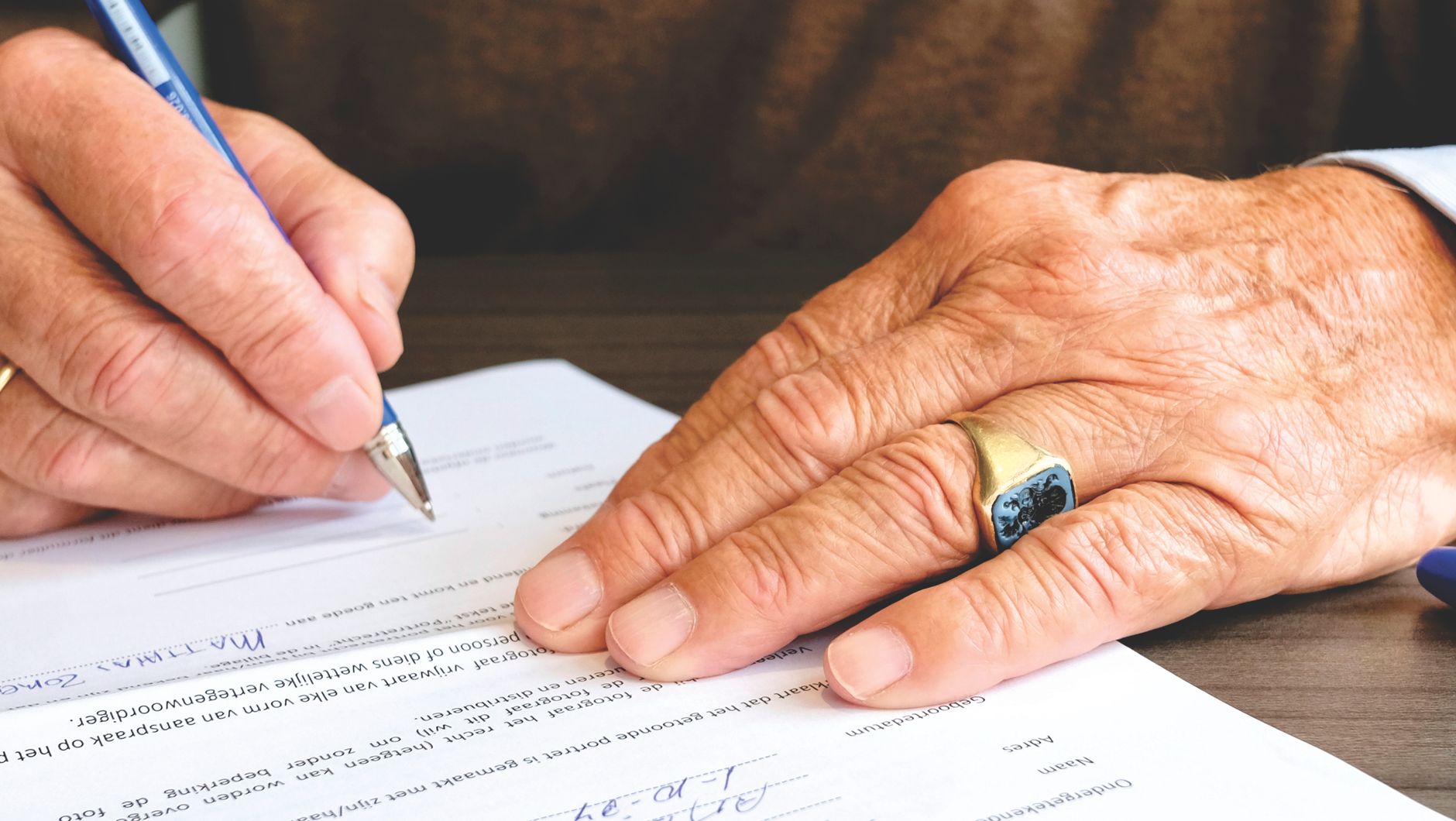
Not everyone can produce a full legal signature — an injury, a stroke, a progressive condition, or a lifetime without formal schooling can all make a signature impractical or impossible. Kansas and Missouri both recognize “signature by mark” as a valid way to execute a document, and it’s notarized differently from a standard signature. It comes up more often than people expect, and it’s not something to be embarrassed about arranging.
What a signature by mark actually is
Instead of a full name, the signer makes a mark — traditionally an “X,” though it can be any consistent mark the person is capable of making. What makes it legally sound isn’t the shape of the mark; it’s the additional layer of verification that goes around it.
What the notary adds
- A witness to the mark — someone who watches the signer make the mark and can attest to it, in addition to the notary.
- Written confirmation near the mark — typically the signer’s name printed next to the mark, along with language confirming this is their intentional signature.
- The same identification and willingness checks as any other notarization — a mark doesn’t lower the bar for confirming who’s signing and that they understand what they’re signing.
This is not the same as a power of attorney signing on someone’s behalf
A common mix-up: signature by mark is still the actual signer making their own mark, in their own presence, with their own intent. It’s different from a POA agent signing a document for someone else entirely, which is a separate legal mechanism with its own requirements. If someone can’t physically make any mark at all — not even an X — that’s a situation where a power of attorney, guardianship, or a signature-by-direction procedure (where a proxy signs under specific statutory conditions) needs to be considered instead, and that’s worth a conversation before the appointment, not during it.
Being unable to sign your name in the traditional sense doesn’t take away your ability to execute a legal document. It just changes the paperwork around how that gets documented.
What to expect at the appointment
I’ll ask a few extra questions ahead of time — whether a witness will be present, what kind of mark the signer is comfortable making, and whether the document itself has any special formatting requirements for a mark signature. None of it adds significant time to the appointment, and none of it should feel like an obstacle. It’s simply the correct, well-established way to handle a situation that comes up more than most people realize.
Arranging a signature by mark?
Tell us about the situation when you book, and we’ll make sure the right witness and paperwork are ready to go.